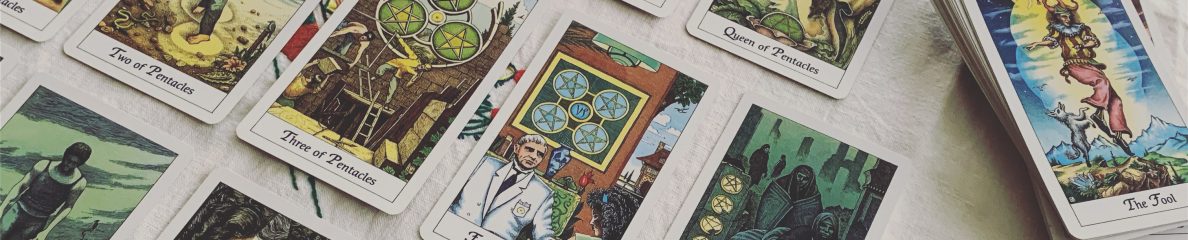
You only have to watch Ricky Gervais’s dark comedy, ‘After Life’, to know that many people spend time at gravesites chatting to a beloved who has died. Many mothers have gone to children’s graves seeking peace. However gone are the days when families picnicked in the grounds of cemeteries Now most historic cemeteries lie quietly with barely a visitor these days. I love to visit with my picnic basket and a deck of Tarot cards to have a graveside chat. There is much to learn from those who are resting in these fading spaces.
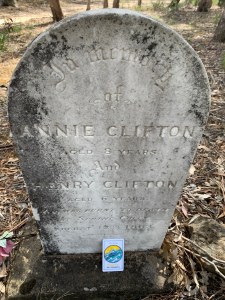
There is an unlikely drawcard between the old gold cities of Ballarat and Bendigo and yet it would be all too easy to pass by and not notice it. The Sandon Cemetery is a must visit for the slow travelling cemetery explorer.
Each year hundreds of Catholic pilgrims pause here on their 90 kilometre walk between the cathedrals at Ballarat and Bendigo to rest their weary soles and too sing. I have passed the parade on the Creswick to Newstead road and wondered what it was all about. It was only recently that a Sandon local told me about the pilgrimage and how the pilgrims sing at the gravesites. This gives a whole new meaning to the Clarissa Pinkola Estes story about singing over bones.
Sandon Cemetery is a special place for the cemetery explorer. This place shares one of the regions great landscapes. When you stand amongst the weather beaten headstones you can look through white-trunked eucalyptus trees towards the rising Sandon basalt ridge. No wonder a community of Swiss-Italian migrants chose this part of Central Victoria as home.
I have visited regularly but it was only on my recent visit that I decided that rather than sing to the bones (no self respecting bones would enjoy the rasping sound from my vocal chords) I would talk to the bones and ask them to share a message about their life and how I should live.
The result is that I have a whole new hobby and interest, revisiting historic cemeteries to have graveside chats.


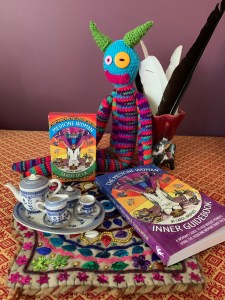


 Maybe you do not have a young calf to read too but there are plenty of alternatives that will lead to rich journal entries.


 Hedy Lamarr was the daughter of a prosperous Viennese banker. Lamarr was privately tutored from age 4; by the time she was 10, she was a proficient pianist and dancer and could speak four languages. At age 16 she enrolled in Max Reinhardt’s Berlin-based dramatic school, and within a year she made her motion picture debut in Geld auf der Strasse (1930; Money on the Street). She achieved both stardom and notoriety in the Czech film Extase (1932; Ecstasy), in which she briefly but tastefully appeared in the nude. Her burgeoning career was halted by her 1933 marriage to Austrian munitions manufacturer Fritz Mandl, who not only prohibited her from further stage and screen appearances but also tried unsuccessfully to destroy all existing prints of Extase. After leaving the possessive Mandl, she went to Hollywood in 1937, where she appeared in her first English-language film, the classic romantic drama Algiers (1938). Lamarr became a U.S. citizen in 1953.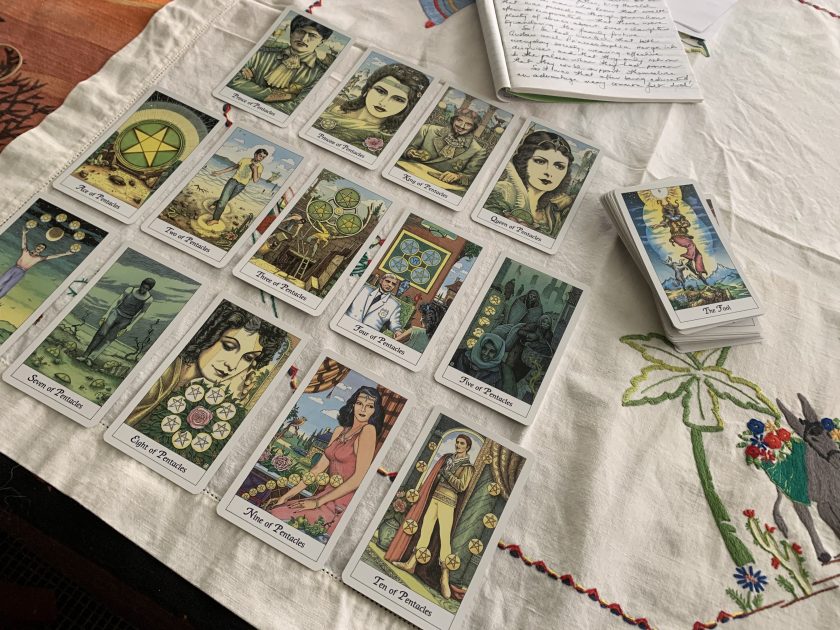
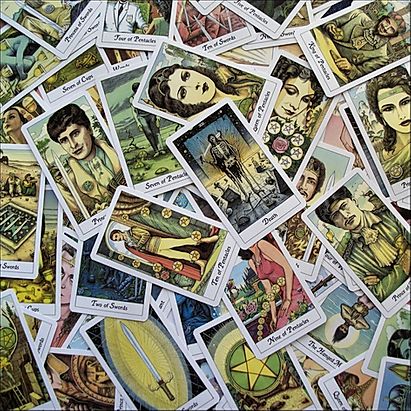


 I am not sure where the idea came from but a week or so back I decided to revisit some of my favourite cemeteries to read some tarot cards with the long dead. (I confess that visiting cemeteries, armed with Tarot decks, is a bit different even by my standards.) I set out with my two companion animals, a picnic basket and a tarot deck.
 The Tarot Midwife