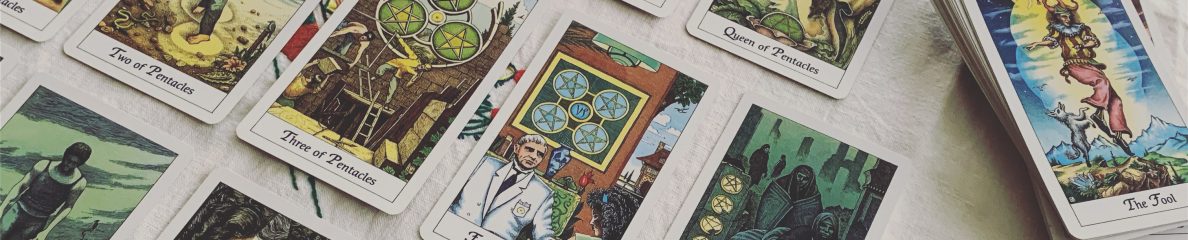
Reconnecting With A Deck

All Tarot and Oracle Deck collectors will have at least a couple of decks that they have disconnected from. Yule is the time when many people reconnect with friends and family. If we think of a deck as a person who we have a relationship with it might just be time to reconnect. It may sound slightly crazy but you can take the time to hold the deck and explain why you’ve been out of touch. You might briefly describe what has been going on with you if you must explain your disappearance, but don’t put yourself down. No mea culpa about how bad or shameful you are. Just reconnect — don’t try and solve all the relationship issues of the past.

Engaging in the challenges that appear in the Instagram Community is a great way to reconnect, build a relationship with your deck and develop your tarot reading skills all at the same time. There are a vast number of challenges to choose from and most can be done at your own pace.

Two that have caught my eye this month are Deckember 21, which encourages participants to showcase their favourite Majors and Inner Landscape of the Dark which provides a way to mine your inner landscape.

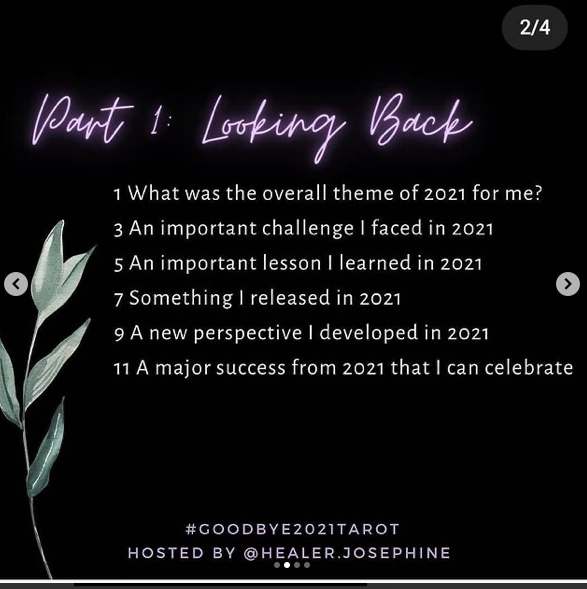
Personally I love to work with Josephine Hardiman’s Challenges. She consistently posts thought provoking work which you commit to doing every second day. Her latest is the Goodbye to 2021, which is very appropriate for December.

Over to You

The Lions Gateway Tarot by Jessica Henry who has a new edition available.

The Lions Gateway Tarot is a beautiful Indi deck which I ordered in 2020 before the cost of postage spiraled out of control. I was very excited to get it but it has languished as, like a Wattle Bird I have taken off the feed on what has appeared to be juicier nectar.

I am not in to making New Year resolutions but I am prepared to adopt a different view with the decks I have in my collection and commit to building a closer relationship with them.

Identify a deck you are prepared to reconnect with and spend some time completing a challenge with this one deck.
Captured and Imprisoned – Meeting a Major

The King and Queen of Hearts were seated on their throne when they arrived, with a great crowd assembled about them—all sorts of little birds and beasts, as well as the whole pack of cards; the knave was standing before them, in chains, with a soldier on each side to guard him; and near the king was the white rabbit, with a trumpet in one hand and a scroll of parchment in the other.
Alice in Wonderland

As the Moon rose, casting its light on the world of the Weasels Pond there was a sudden noise behind us. A small infantry, comprising of all sorts of wildlife, surrounded me, demanding to see my passport. When I couldn’t produce one I was unceremoniously marched off to the Royal Palace and chained up in a dank cell. I remembered Gulliver, who was imprisoned by the Lilliputians when he first reached the island because they were frightened by his massive size. I hoped things here could be quickly resolved. However, the Weasel, who was supposed to help me squeeze out of sticky situations, had been charged with being an accomplice, was no where to be seen.

Bereft I sobbed and wailed at the indignity of it all, at my stupidity. What fool encouraged me to clamber into this alien world? I could be tucked up in the safety of my home, but no, I had decided to join what was promoted as an adventure. Shivering and shaking in a dank prison is certainly not my idea of an adventure!

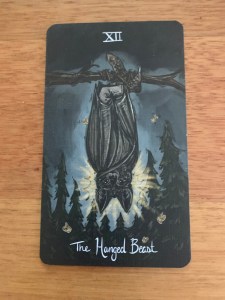
The Hanged Beast from the Northern Animal Tarot

Suddenly the silence was broken by a gruff voice who literally yelled out demanding that I get a grip and shut the horrible wailing noise.

Startled I looked around to identify who was reprimanding me so harshly. As my eyes adjusted to the darkness I spied a beast hanging upside down in a corner.

Now some folk would stain their underwear when finding themselves confined with a Hanged Beast, but not me! I was relieved to find I have a companion, even if that companion was decidedly gruff.

I thought of the Guided Tarot imagery that I sometimes listen to and I decided that I could interview this creature and glean some advice. A Hanged Beast was sure to have some timely suggestions for me about what kind of energy, what kind of action is needed to extricate myself from this prickly situation.

As the Hanged Beast took in my overtures he barely moved. He seemed completely at ease hanging upside down.

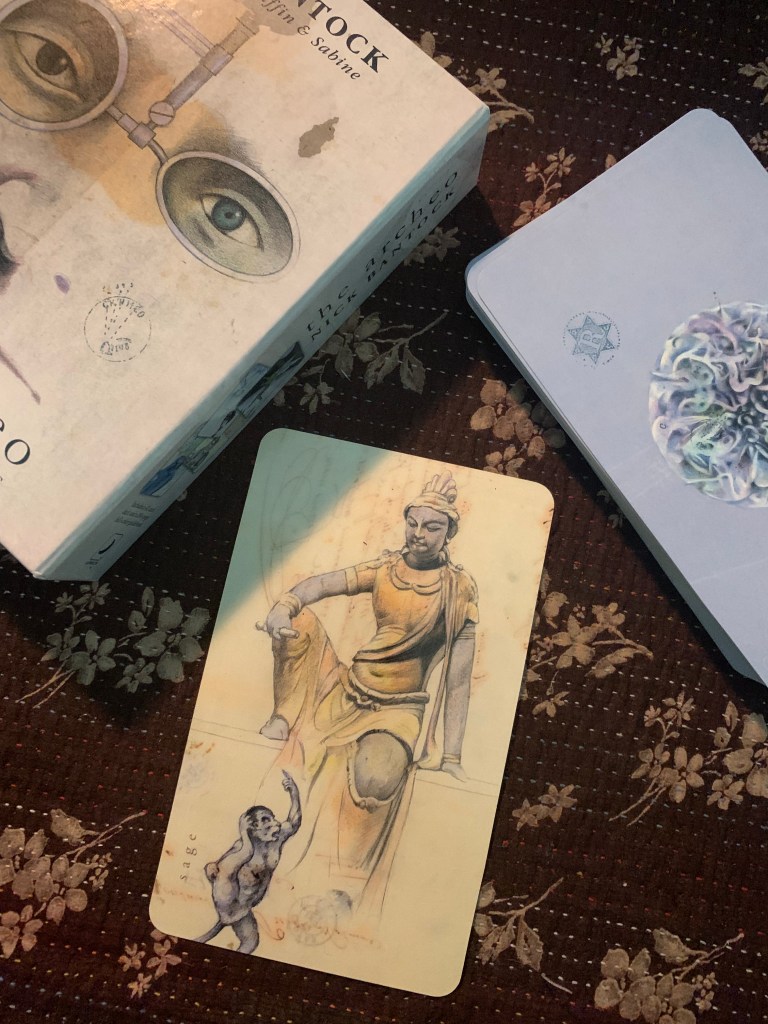
“Why don’t you use that new deck, the Archeo, to determine what kind of energy you actually have that you need to manifest” he dryly suggested.

I was confused! This deck was back at home in my work space there.

The Hanged Beast smiled a knowing smile. “This is a magical place. We can beam it up for you” And with that I found the Archeo sitting next to me.

I drew a card! It was none other than the Sage who reminded me to pause and quietly meditate upon my situation.

Over to You

Christopher Vogler has written in depth about the stages of the Hero’s Journey, which is what we have probably embarked on. Every traveler is invariably confronted with a number of challenges. Tarot decks take us on these archetypal journeys and have become invaluable tools for writers and artists alike. Then, of course there are some outstanding Archetype decks like Archeo by Nick Bantock and Archetype Cards by Carolyn Myss.

Choose a deck from your collection. Enter it and wander for awhile.

What challenge are you faced with?

Which Major or Archetype helps you shift your perspective and move forward?

Trick for LearningTarot

Far too many people worry about reading tarot cards the “right” way. There are actually far more helpful reading techniques, depending on the situation. It is also believed that when reading for others the reader must do what the client expects. This all too often means to predict the future and tell people how to obtain their desires. Is the job of a foot doctor to cure lung cancer? As readers we have a right, even an obligation, to discover what we do best and to offer that in readings both for ourselves and for others. The task becomes learning what we do best and offering that with clarity and confidence.

One of the tricks I have found to be very successful is to regularly complete challenges and by using the cards to kick start story telling.

Recently I have been working on a project helping Aussie Wildlife learn about tarot and I have found that drawing Australian wildlife in tarot settings has helped refine my knowledge of the cards

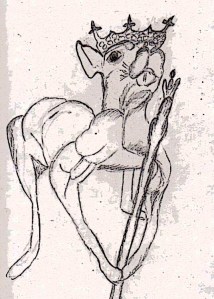
Big Red is the King of Wands

For example, in response to the Tarot Storytelling Spread I drew the Big Red Kangaroo as the King of Wands.

Kangaroo’s are herbivorous. They reside throughout Australia, Tasmania and New Guinea. Kangaroos have powerful, long hind legs and feet for leaping and jumping with. Their long tails thicken at the base to help them balance. Each of their hind feet has 4 toes, this number represents foundations.

This big Red Kangaroo, proudly wearing his crown of authority, has the power to create a safe and secure environment for his mob. The Red Kangaroo has an innate capacity to adapt to new situations and environments. Kangaroos are extremely focused beings, with their energy fields tightly woven around them with no room for distractions. 

If hunted by a Dingo, human or a rare Tasmanian tiger, the Big Reds are very fast and hop effortlessly to safety without a moments thought about where they are going. They use their strong instincts to guide them.

For us humans, there is a great lesson to be learned from this – instead of thinking about every single, most minute step we take we must let our instincts guide us.

The Spirit of the Fungi

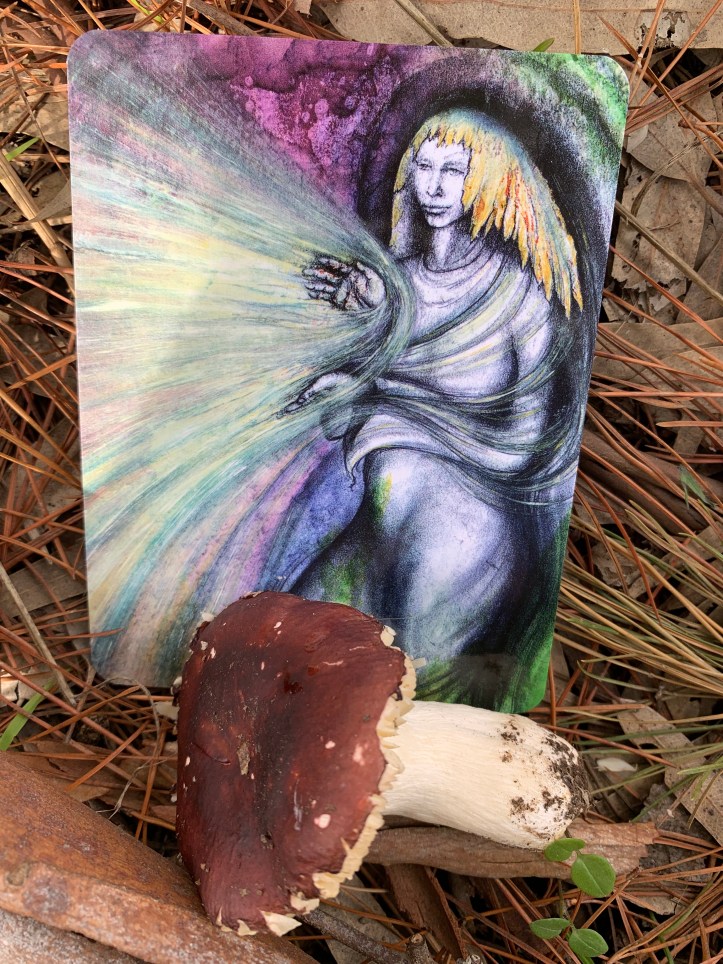
I pause to commune with the serene spirit of the Fungi. She may live in darkened places but her light shines brightly and she is full of wisdom. 

“For millennia, western thinking has been dominated by the idea that we are separate from, and superior to, the rest of nature. Plants and fungi are seen as dumb, mechanical processes that we can plunder for materials and chemicals without considering how we relate to them. Other cultures see other lifeforms as peers. They are viewed as creatures deserving of respect and from whom we might be able to learn something. 

From our human-centered perspective, fungi seem rather inert and unimpressive. They don’t move much and seem to be uninteresting passive objects rather than intelligent beings. Just because they don’t move, however, doesn’t mean they don’t have behavior”. 

Life as we know it would not exist without fungi. They are the critical link in the biological cycle of life and death. 

Fungi are the great recyclers. They play a major part, with prokaryotes such as bacteria, in breaking down organic matter. Without them we would soon be up to our ears in dead plant matter and animal carcasses. Worse still, we would be surrounded by mountains of dung that would not rot. 

Plants would soon run out of fresh nutrients. Animals in turn would go hungry. 

There would be no forests. Few people realize that trees rely on networks of fungi working in partnership with their roots. Without fungi to make nutrients available, trees would be unable to survive. Consider the many roles trees play in supporting life on earth and you’ll realize the importance of this union. 

Reference: The Fungus Amongst Us

Pausing to Listen

I pause to talk to the spirit of the Wattle. She is feeling joyful as she dresses in a golden ballgown that she will wear for her coming out again this season. She tells me that her yellow gown will swirl when she dances on the Spring winds. As she talks a pleasing memory of youthful days, wearing my yellow taffeta ballgown, dancing with my father at the local ball drifts by.

Aperture Stories

“Everyone has a story,” renowned anthropologist Barbara Myerhoff stated, and these stories “told to oneself and others can transform the world.” The name Story Aperture is inspired by Barbara Myerhoff, who described the way a personal story can provide an opening to understand not only one person’s life, but larger truths about the human experience.

Aperture stories are stories which come when we put the light on symbols to be found within Tarot, Oracle, Lenormand or Playing cards.  When we focus like on what the symbol is telling us, we are find deeper meanings which enable us to adapt and adjust our narrative. When we work with an aperture we see well beyond overt meanings and tap into important healing structures.

When we work intuitively with Lenormand, Tarot and Oracle cards we hold micro art galleries in our hand and we have access to insights that have been drawn from the collective unconsious.

When we use a camera it is the depth of field that will determine:

  1. where your viewer’s eye is drawn in a photograph, and
  2. whether or not the photograph is telling a story.

If we keep the camera lens in mind as we examine the cards that have emerged more light is shone on particular features. Often it is the understructure which reveals an entirely fresh model for telling a story. When we work intensively with an image it can help us  face a difficult situation or deal with and heal trauma.  

I have found it inspirational to sit with another person, over a Devonshire tea (Coffee), to sling cards, work intuitively and to listen to the stories that rise up. In the process of working out what the understructure is telling us, at a particular moment in time, we are telling aperture stories.

Writing Portraiture

“The portrait is generally a form of description, and like all descriptions it is a particularly enjoyable device to reread. Anais Nin is the master of descriptive portrait in the diary. Nin made an effort to be fair and free of malice in her word-portraits of friends and acquaintances, though she was aware of weaknesses as well as talents of those she described. In writing portraits she tried to include as many details as possible about herself and the other person”.
Tristine Rainer The New Diary.

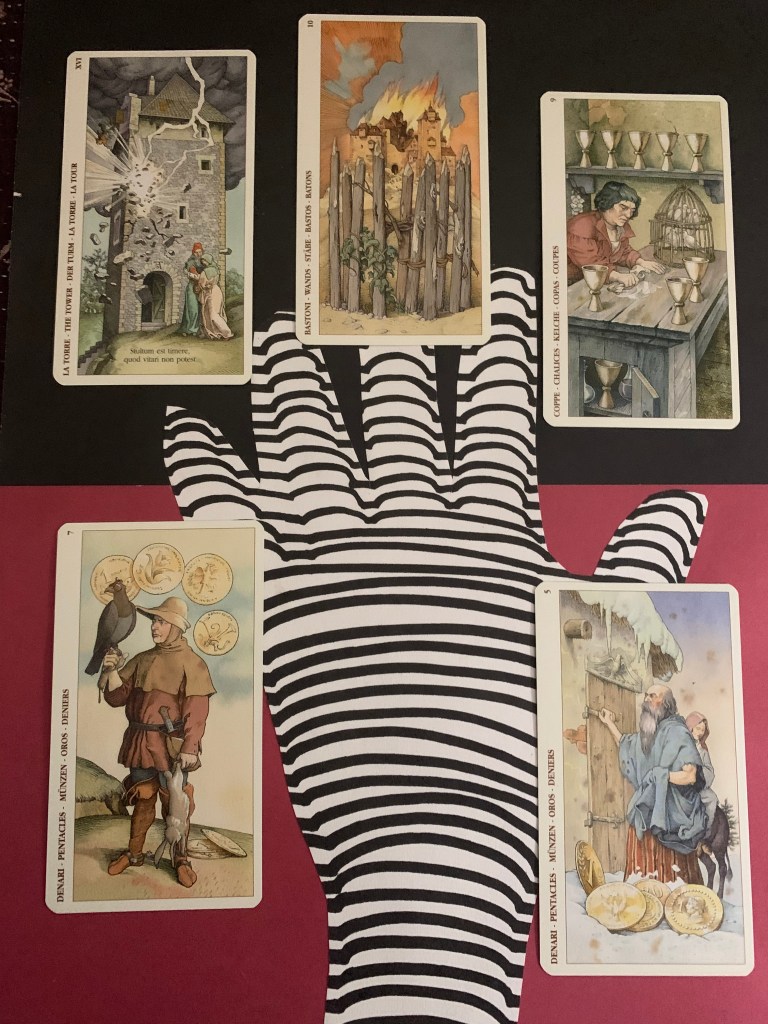
‘The Hand’ is a device I have repeatedly used in writing classes. I have people place their hand on their notebook and draw around their fingers. Then I suggest that they lay down some cards. The card for the thumb is the primary figure for this word-portrait. The other four fingers represent people and events that have impacted on this persons life.

  • Carefully look at the pictures. Make sure to take in as much detail as possible. It is important to look very closely. 
  • What are the different elements? Plants? Buildings? Flowers? Animals? What is the landscape? Are there people in the card? What is the person in the picture doing? What objects do you see? Why do you think they are there? What’s in the background? What’s in the foreground? How do all of these different elements come together into a coherent story?
  • Notice every small and large detail and make a note of it. Absorb the entire card into your mind.
  • Now set your timer for 20 minutes. And start writing remembering that you are not in a writing competition.

“Remember that a portrait done like this is never really finished. You can always recolour it, revise it, contradict it, add to it. The mobile,  evolving quality of the portrait makes it a useful tool in recognizing the psychological process of projection. Rather than just seeing the person on his or her terms you are likely to see a mirror reflection of yourself and gain insights about yourself. By writing portraits you begin to see if the face you are describing is your own”. Tristine Rainer The New Diary

Telling Tarot Stories

Great Tarot readers, like writers, know how to weave the story between the Tarot cards to create highly engaging and meaningful Tarot readings for their clients. They see patterns between the cards and combine these intuitive messages into a beautiful story that is unique to the client and their situation. This exercise is good for writers looking to warm their hand by practicing on a daily basis. It is also a good practice for a tarot reader to strengthen their spontaneous story telling skills

Every Tarot card contains its own unique story and each story can be expanded by using more than one card. Every card in a Tarot deck is connected by an invisible thread.

As writers looking to maintain a daily practice Tarot cards are a wonderful source of inspiration.

Over a cup of tea or coffee one way to start the day is to quietly shuffle a pictorial deck and draw some cards. In this instance I chose the Tarot of the Durer which is an art deck compiled by taking scenes from some of Durer’s famous work. I opted to choose just two cards.

Lay out your cards as I have done here.

  • Carefully look at the pictures. Make sure to take in as much detail as possible. It is important to look very closely. For example, did you notice that the eagle is chained and that there is an ominous raven shaped cloud above the old man in the 10 of Pentacles? What is your impression of Temperance’s mood? How is she relating to the cow? What is her connection to the elderly man in the 10 of Pentacles?
  • What are the different elements? Plants? Buildings? Flowers? Animals? What is the landscape? Are there people in the card? What is the person in the picture doing? What objects do you see? Why do you think they are there? What’s in the background? What’s in the foreground? How do all of these different elements come together into a coherent story?
  • Notice every small and large detail and make a note of it. Absorb the entire card into your mind.
  • Now set your timer for 20 minutes. And start writing and sketching, remembering that you are not in a writing or art competition.
  • Make up a story as you go along. Use the elements from the picture in your story. You can be as creative as you like – just let yourself go wild. Write down a story in the 20 minutes you’ve set aside.

Warming the Hand – Honing One’s Knowledge of Pentacles

I keep to this routine every day without variation. The repetition itself becomes the important thing; it’s a form of mesmerism. I mesmerize myself to reach a deeper state of mind.
Haruki Murakami

Write freely and as rapidly as possible and throw the whole thing on paper. Never correct or rewrite until the whole thing is down. Rewrite in process is usually found to be an excuse for not going on. It also interferes with flow and rhythm which can only come from a kind of unconscious association with the material.
Steinbeck

When I run writing classes I always promote the benefit of writing on a daily basis to keep the ‘hand warm’ so to speak.

In this instance I have chosen a character, the Hermit, from the Major Arcana and placed him alongside the court cards of the suit of Pentacles. Then I laid out the 10 cards to represent his journey back into the outside world.

To begin I have decided that the Hermit has been living in isolation in Cappadocia for many years. Word has reached him about the dramatic changes that have taken in the outside world and he has decided to venture out again.

I will make notes about his journey as he moves through this suit.

Of course, working in this way is also a good way to sharpen your knowledge of the cards in a new deck and refine your readings.

Past Life Work with Tarot

Do you believe you have lived before? Are you curious about your past life? How might a past life reading be incorporated into a memoir?

Reincarnation appears to be woven into the fabric of the modern esoteric tarot. That fact, combined with tarot’s unique ability to tap thoughts, memories, and stories long submerged in the subconscious, makes the deck a powerful tool for exploring past lives.

This Past Life Tarot Spread was presented by @thevillagetarotwitch

Karly @thevillagewitch is doing some fabulous work with Past Life Readings. She generously volunteered to do readings for followers on Instagram on the United States Election Day and I was delighted with the reading she provided me.

Then I decided to ask her if she would do a reading for Georgie, the former Popess of the Legrande Circus and Sideshow Tarot who I am currently doing some memoir work with

Karly generously agreed and you will find our readings over on the site Georgie and I have set up as an online journal.

If you are interested in learning more about past life work using Tarot check out this article by Mark McElroy.