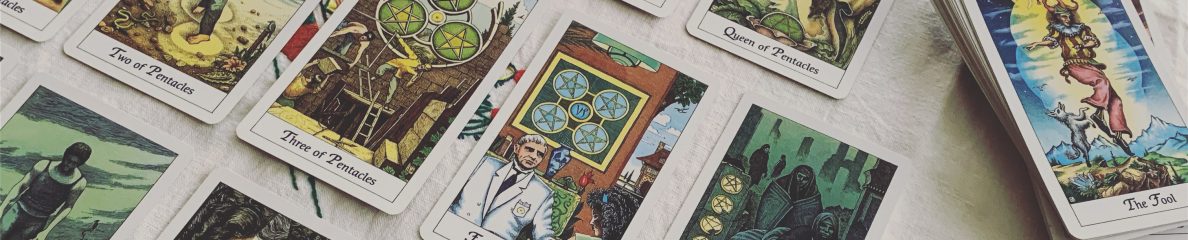
For something so universally recognizable, most people know little about the tarot outside of its supposed ability, with the help of a skilled reader, to foretell the future. Tarot cards are very rich in symbolism and occult significance. With their mysterious illustrations and buried meanings so open to interpretation, it’s hardly surprising that a number of sci-fi and fantasy books have incorporated the Tarot into their world building. If anything, it’s surprising there aren’t more of them: staring into the Tarot is like staring into a ominous mirror-world.
Source: Barnes and Noble

A cursory glance online reveals that figures in the literary world are recognising, what many of us know. Tarot can make a significant contribution to the craft of writing.
“The Creative Tarot: A Modern Guide to an Inspired Life” by Jesse Crispin is a manual intended to show that the tarot deck, primarily regarded as belonging to the domain of the esoteric, can be useful for anyone engaged in creative pursuits.
Like Crispin, at the risk of being deemed a “weirdo mystic”, I am prepared to publicly come out of the spiritual closet and promote the benefits of turning to a deck of cards for inspiration for fiction and art. Aside from the fact that I have seen the benefit of using cards in writing classes, I am in esteemed company. Many respected writers have made use of the tarot: Yeats, Italo Calvino, Salvador Dali, and even Charles Williams, a novelist and theologian who belonged to the Inklings literary circle, have drawn on the cards for inspiration.
Given that many Tarot cards actually depicted imagery of Medieval Dramas that took place in Italy it is not surprising that the cards, which feature characters from those plays, offer a springboard for aspiring wordsmiths. In a post entitled Tarot Fairy Stories I presented a case for using the Cosmic Tarot to help generate a fairy story set in a fantasy world. Needless to say there is a lot more that can be done.
When I found Tribu Arcane, a set of playing cards, in a second hand book shop I couldn’t help adding it to my collection. This deck features a different, traditional image on each card.

In a writing session I laid out the suit of hearts and we spent time considering what story is being revealed. We discussed what ideas might be researched and to kick start discussion I suggested that we could write something about a vibrant dancing troupe who travel, presenting spontaneous performances under sprawling Marula Trees. It is always inspiring to hear other ideas that come forward from the group.
Pull out a deck and experiment! Feel free to share any ideas in the comment section!

 Maybe you do not have a young calf to read too but there are plenty of alternatives that will lead to rich journal entries.


 Hedy Lamarr was the daughter of a prosperous Viennese banker. Lamarr was privately tutored from age 4; by the time she was 10, she was a proficient pianist and dancer and could speak four languages. At age 16 she enrolled in Max Reinhardt’s Berlin-based dramatic school, and within a year she made her motion picture debut in Geld auf der Strasse (1930; Money on the Street). She achieved both stardom and notoriety in the Czech film Extase (1932; Ecstasy), in which she briefly but tastefully appeared in the nude. Her burgeoning career was halted by her 1933 marriage to Austrian munitions manufacturer Fritz Mandl, who not only prohibited her from further stage and screen appearances but also tried unsuccessfully to destroy all existing prints of Extase. After leaving the possessive Mandl, she went to Hollywood in 1937, where she appeared in her first English-language film, the classic romantic drama Algiers (1938). Lamarr became a U.S. citizen in 1953.
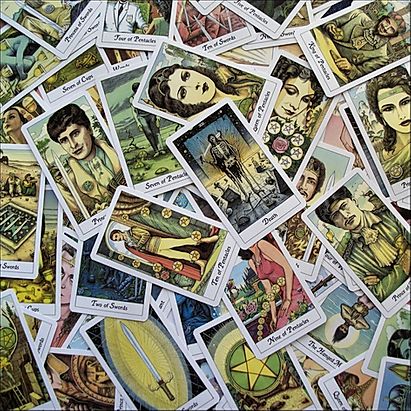


 I am not sure where the idea came from but a week or so back I decided to revisit some of my favourite cemeteries to read some tarot cards with the long dead. (I confess that visiting cemeteries, armed with Tarot decks, is a bit different even by my standards.) I set out with my two companion animals, a picnic basket and a tarot deck.

 The Tarot Midwife